Demystifying the SEA Composite Score: A Step-by-Step Guide for Parents
This post walks through how composite scores are calculated
7/5/20263 min read
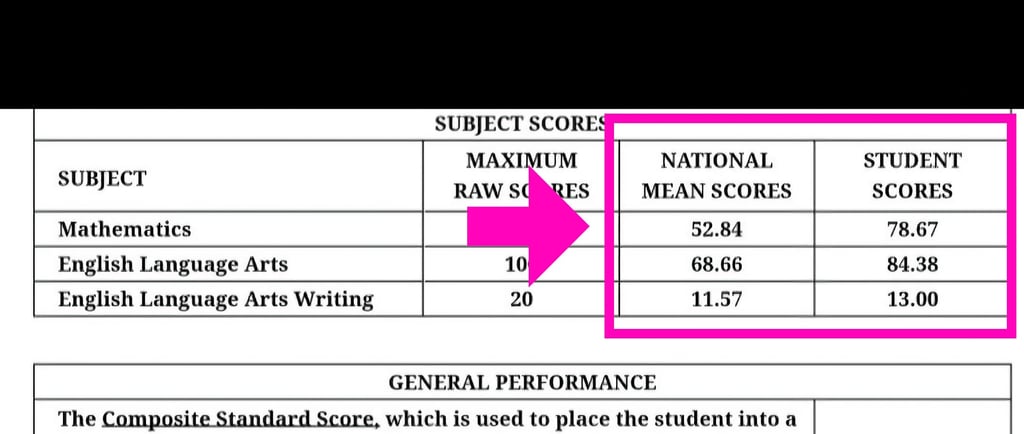
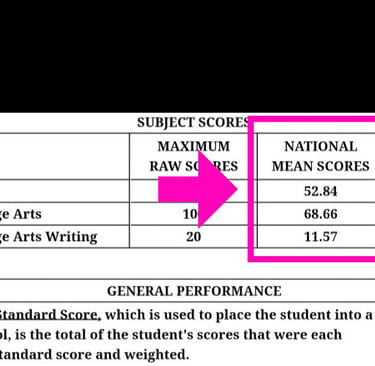
If you’ve ever looked at your child’s SEA results and found yourself completely baffled by the Composite Score, you are definitely not alone. Many parents look at these numbers and wonder: How on earth did they get this score from my child's actual marks?
Here is the most important secret to understanding the composite score: It is not a simple percentage. Instead, it is a comparison.
The composite score doesn’t just show what your child scored; it shows how well your child performed compared to every other student who took the exam that same year.
If you want to pull back the curtain and estimate the math behind it yourself, here is a simple, step-by-step breakdown.
Step 1: See How Far They Stood Out from the Crowd
The very first thing the system does is look at how far your child's raw marks were from the national average (the mean) for each subject.
To find this difference, you subtract the national average from your child's mark:
Difference = Student's Mark - National Average
Above Average: If your child scored higher than the national average, this number will be positive.
Below Average: If they scored lower, this number will be negative.
💡 Spoiler Alert: This is why a final composite score above 200 means your child performed better than the national average, while a score below 200 means they scored below it.
Step 2: Calculate the "Z-Score" (Leveling the Playing Field)
Next, we have to adjust for how "spread out" everyone's marks were. In the testing world, this spread is called the Standard Deviation.
While this number changes slightly every year, it usually hovers around 23%. To keep our estimate simple and "good enough" for a workable calculation, we will use 23%.
By dividing our difference from Step 1 by this percentage, we get what statisticians call a Z-Score. A Z-score is just a tool that equals exactly 0 if a student scored perfectly average, positive if they are above average, and negative if they are below.
Here is how you estimate it for each subject:
Mathematics Z-Score = {Student Math Mark} - {National Average Math Mark} / {23}
ELA Z-Score = {Student ELA Mark} - {National Average ELA Mark} / {23}
Creative Writing (CW) Z-Score = {Student CW Mark} - {National Average CW Mark} / {4.6}
(Why 4.6 for Creative Writing? Since CW is marked out of 20, 23% of 20 equals 4.6!)
Step 3: Make the Numbers Prettier (The Standard Score)
Because Z-scores are tiny, awkward decimals (usually between -1.5 and +1.5), the examiners boost them to make them easier to read.
To do this, they multiply the Z-score by 15 (to make it bigger) and add 100 (to get rid of those negative numbers).
{Standard Score} = 100 + (15 x Z-Score)
Now, you have a beautiful, clean Standard Score for Math, ELA, and Creative Writing.
Step 4: Add It All Up (The Final Ratio)
Finally, these standard scores are combined. However, they aren't all worth the same amount. The final composite score weights them in a specific ratio:
Mathematics: 100%
ELA: 60%
Creative Writing: 40%
When you apply these percentages to the three "100s" we added in Step 3 (100% of 100 + 60% of 100 + 40% of 100, they combine perfectly to create a baseline of 200.
This 200 is the fixed starting point. Your child's final composite score will go up or down from 200 based entirely on how far above or below the national average they were in their subjects!
Summary Table: From Raw Marks to Composite Score
1. Subtract the Average: Finds the distance from the national mean. Determines if the baseline is positive or negative.
2. Divide by Spread (23%): Calculates the Z-Score. Evens out the differences across subjects.
3. Multiply by 15 & Add 100: Turns Z-scores into Standard Scores. Makes the numbers easier to read and removes negatives.
4. Apply the Subject Weights: Combines Math (100%), ELA (60%), and CW (40%). This calculates the final score using a baseline of 200.
And that's it! While the official system uses exact, complex decimals, this simple formula gives you a clear window into exactly how your child's work translated into their final SEA score.
What Do These Scores Actually Mean?
Now that you know how the math works, here are two quick benchmarks to help you understand your child's results:
Any Score Over 200 is a Win: If your child scored over 200, celebrate! Because the score is a direct comparison to the national average, a score over 200 means your child performed better than the national mean. You should be incredibly proud of their hard work, as they outpaced the average performance across the country.
Scores Above 230 are Exceptional: If your child receives a composite score above 230, they have reached a major milestone. In the testing world, this means they scored one full "standard deviation" above the national average. In plain English? They didn't just do a little bit better—they comfortably outscored the vast majority of test-takers, placing themselves well into the top tier of students for that year!
SEAscores.net
Helping students in their SEA journey. I am not selling anything
Resources
info@seascores.net
© 2025. All rights reserved.